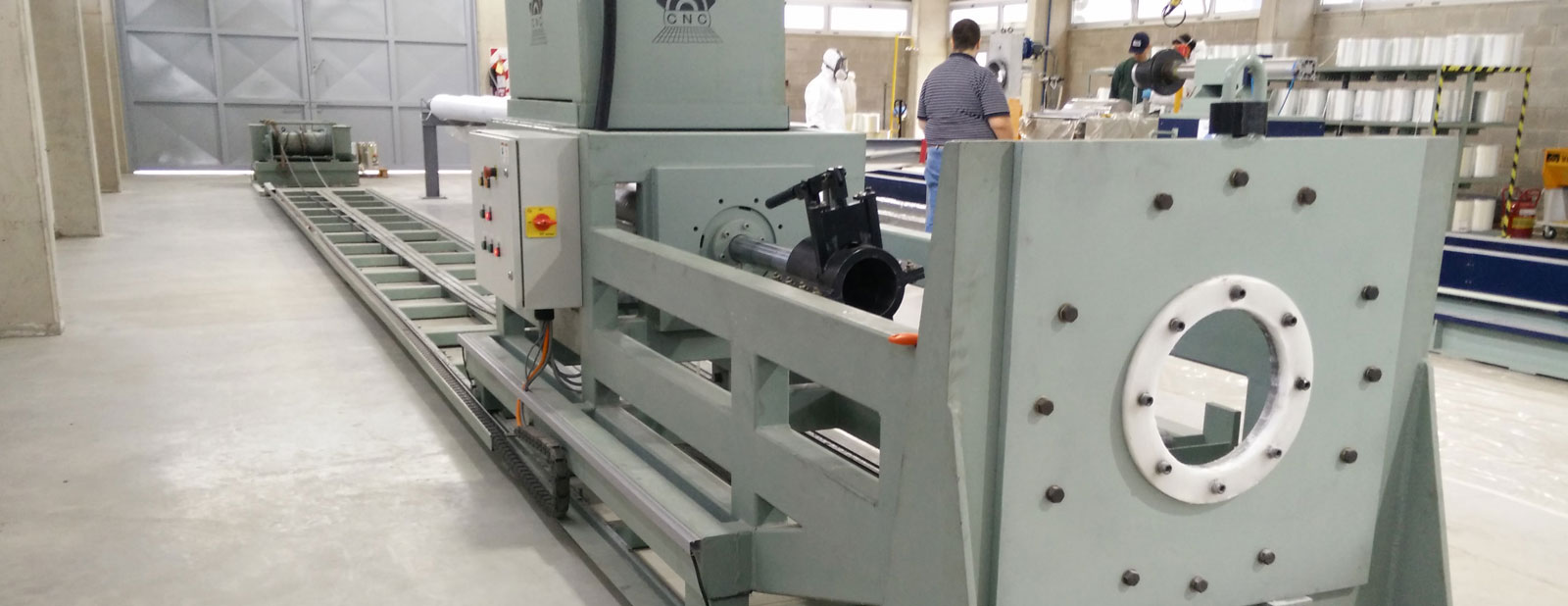
CNC machine is one of those terms that gets used constantly in manufacturing but is rarely explained clearly for people who are new to the field. If you have been wondering what CNC actually means, how these machines work and why they matter, this article gives you a straightforward answer.
What Does CNC Stand For?
CNC stands for Computer Numerically Controlled. It refers to any machine where the movement of the tool or the workpiece is controlled by a computer program rather than by a human operator turning handles, adjusting levers or physically guiding the process.
The computer reads a set of numerical instructions — coordinates, speeds, feed rates, tool paths — and converts them into precise, coordinated movements of the machine's axes. The result is a manufacturing process that is faster, more accurate and more repeatable than anything a human operator could achieve manually.
How Does a CNC Machine Work?
The process starts with a design. An engineer creates the component geometry in CAD (Computer-Aided Design) software. That design is then fed into CAM (Computer-Aided Manufacturing) software, which calculates the sequence of movements the machine needs to make to produce the component and generates the machine instructions — typically in a format called G-code.
The G-code is loaded into the CNC machine's controller, which interprets the instructions and drives the machine's axes accordingly. Servo motors move the axes to the programmed positions with high precision, often to within a few hundredths of a millimetre.
The operator's role on a CNC machine is largely one of setup and monitoring — loading the correct program, fixturing the workpiece, setting up tooling, verifying the first part and watching the machine run. The actual machining happens automatically.
Types of CNC Machines
CNC technology is used across an enormous range of manufacturing processes, and different CNC machine manufacturers often specialise in different types. Some of the most common include:
CNC milling machines rotate a cutting tool against a stationary workpiece to remove material and produce flat surfaces, slots, pockets and complex three-dimensional profiles.
CNC lathes and turning centres rotate the workpiece against a stationary cutting tool to produce cylindrical components — shafts, bushings, turned fittings and similar parts.
CNC routers are similar to milling machines but optimised for high-speed cutting of wood, plastics, foam and soft metals.
CNC laser and plasma cutters use a laser beam or plasma arc to cut sheet metal and other materials with high precision.
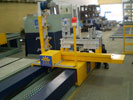
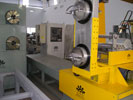
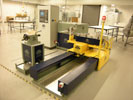
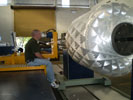
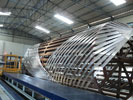
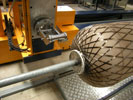
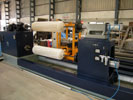
A CNC winding machine — sometimes called a filament winding machine, the type CNC Technics specialises in — winds continuous fibres onto a rotating mandrel in programmed geometric patterns to produce composite components: pipes, pressure vessels, cylinders and structural tubes with precisely engineered mechanical properties.
CNC grinding machines use an abrasive wheel to achieve very fine surface finishes on hardened components.
Why Does CNC Control Matter?
The fundamental advantage of CNC control is repeatability. A CNC machine produces the same result every time it runs the same program, regardless of which operator is running it or how many components have already been produced that day. For manufacturers who need consistent quality across high production volumes, this is not a nice-to-have — it is essential.
CNC machines are also faster than manual alternatives for most production tasks. Once the program is written and the setup is done, the machine runs at optimum speeds automatically, without the pauses and variabilities that come with manual operation.
They are also safer. Removing the operator from the working zone reduces accident risk significantly.
Finally, CNC machines enable complexity that would simply be impossible by hand. The winding paths on a composite pressure vessel dome, for example, involve simultaneous coordinated movement of multiple axes in patterns that no human operator could replicate manually. CNC control makes this kind of precision manufacturing possible.
CNC Machines in Composite Manufacturing
In composite manufacturing specifically, CNC technology has transformed what is possible. A CNC filament winding machine allows manufacturers to produce composite pipes, cylinders, tanks and structural tubes with precisely controlled fibre orientations, consistent wall thickness and repeatable quality from batch to batch.
CNC Technics is one of the established CNC machine manufacturers in India, designing and manufacturing CNC winding machines for composite manufacturers across India and internationally, offering systems from 2-axis through 6-axis configurations.
If you would like to know more about CNC winding machines and how they might fit your manufacturing requirements, contact our team.
⬅ Back to Blog